
AI Workforce Management for Enterprise Operations
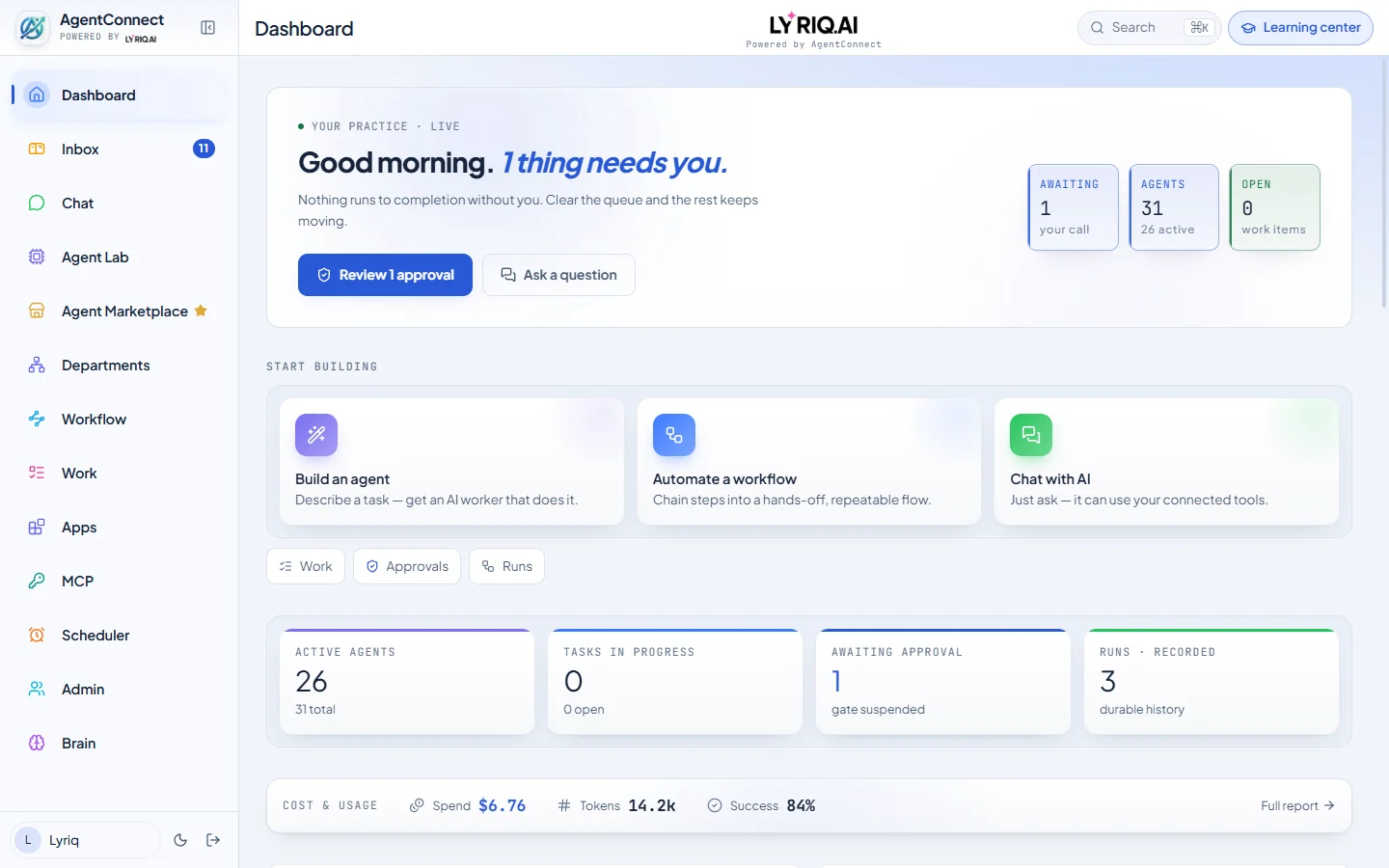
AI workforce management software gives an enterprise one governed view of work spread across several delivery partners. LYRIQ's AgentConnect sits above the BPOs and internal teams you already use, measuring performance, quality and cost the same way everywhere.
- One reporting basis, not five different report formats
- No contract renegotiation and no change of provider
- Human approval stays on consequential actions
The challenge
Enterprise Challenge
Enterprises want to move faster with AI. But outsourced operations introduce real constraints.
LYRIQ was built to operate inside these realities.
Changing vendors is risky.
Renegotiating contracts is slow.
Building internal AI teams is expensive.
A neutral layer
What LYRIQ Provides to Enterprises
Get one governed view across the outsourced delivery partners you already work with, without renegotiating a single contract.
- A neutral AI layer that runs your day-to-day operations, sitting between enterprises and their BPO partners.
- Introduce AI without disrupting delivery or creating vendor conflict.
Operational Intelligence
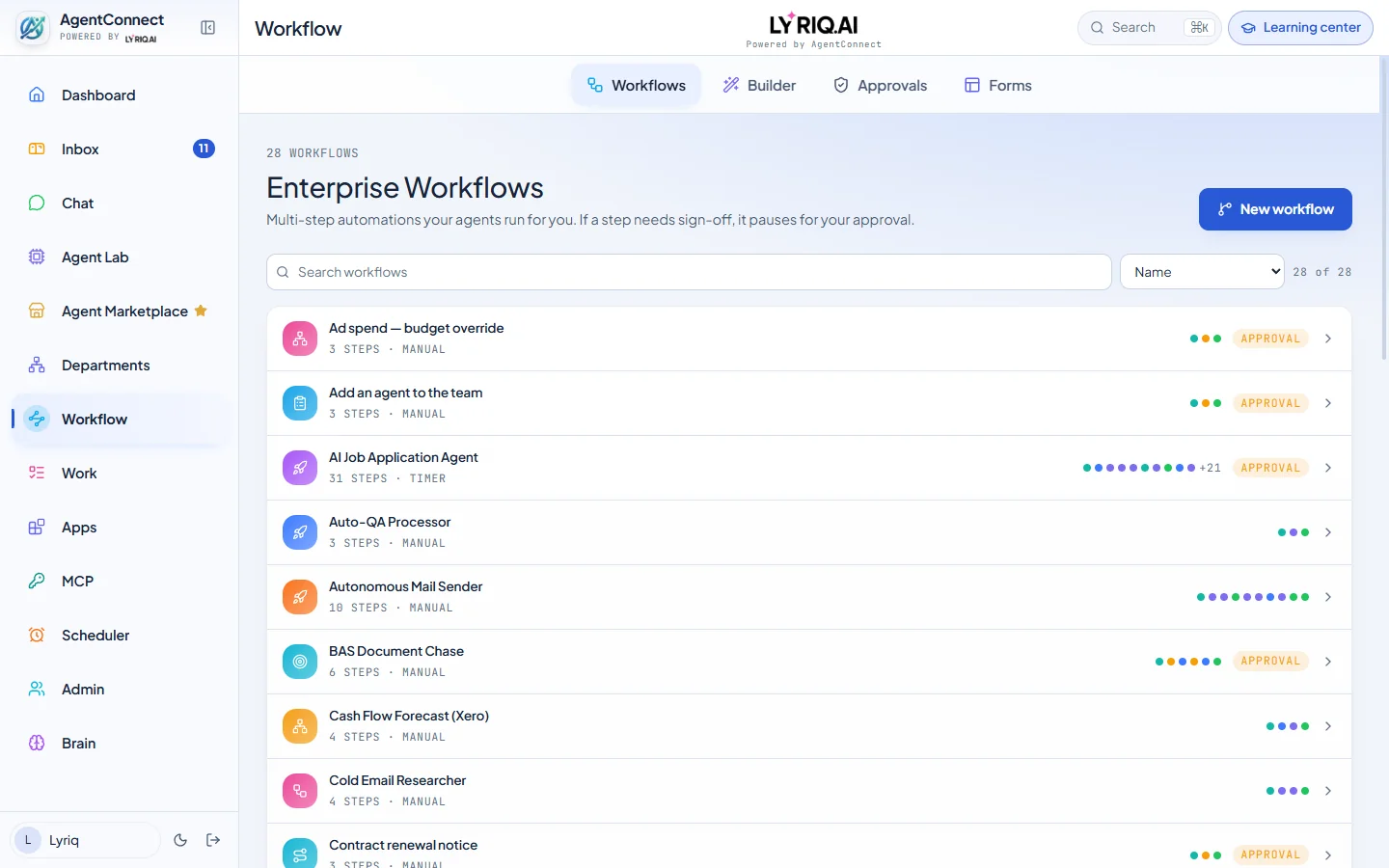
LYRIQ continuously observes how work moves through outsourced operations, giving you visibility into performance, bottlenecks, and opportunities for improvement.
Economising AI Adoption
Leverage AI through your existing delivery partners and pay for outcomes rather than infrastructure, instead of building it in-house or duplicating AI spend across vendors.
BPO Flexibility & AgentConnect
AgentConnect does not source or select new BPO providers. It gives you governed visibility and orchestration across the partners you have already chosen.
Governance & Independence
LYRIQ does not own delivery capacity and does not compete with BPOs. This independence ensures neutrality, transparency, and enterprise control.
Deployment
What Enterprise Deployment Looks Like
The questions that decide an enterprise rollout are rarely about the model. They are about contracts, accountability and what happens when something goes wrong.
Your partners, contracts and SLAs stay as they are.
- 01
Do we have to renegotiate our BPO contracts?
No. That constraint is the reason the platform is built this way. AgentConnect is deployed inside the delivery your partners already provide, so the commercial relationship, the statements of work and the SLAs you signed stay intact. Nothing about vendor selection has to change for AI to reach the floor.
- 02
Who is accountable when an automated interaction goes wrong?
The same party accountable today. Automation does not move responsibility from your delivery partner to a software vendor, which is why the decision path behind every automated action is recorded and reviewable rather than opaque.
- 03
How do we keep visibility across several BPO partners?
Partners run different tooling and report in different formats. Because AgentConnect sits in the delivery layer rather than inside any one vendor's stack, quality scoring and handling data come back on the same basis across every partner on the account.
- 04
What does it cost to run alongside existing vendor spend?
A neutral layer means you are not paying several partners to each build their own AI capability, and not standing up an internal team to duplicate it a third time. Commercial terms are set per deployment rather than published as a list price.
- 05
How long before it is doing real work?
The gating factor is almost never the technology; it is access to the systems of record and agreement on which contact types are in scope. Once those are settled, connecting to the existing telephony, CRM and ticketing stack is configuration rather than a build.
FAQ
Enterprise operations, answered
What is AI workforce management?
Deciding what work exists, who or what should handle it, and whether it got done, when part of the workforce is software. Traditional workforce management forecasts contact volume and rosters people against it. Once agents absorb a share of that volume, the forecast has to cover both, and the interesting number stops being occupancy and becomes what proportion of work needed a person at all.
Does this replace our existing scheduling or WFM system?
No. AgentConnect layers onto the systems you already run through a connector catalogue of 1,135+ applications. Your rostering and payroll stay where they are. What changes is that the work agents handle becomes visible in the same operational picture as the work people handle, instead of sitting in a separate tool nobody reconciles.
How do we keep control when agents are doing the work?
Consequential actions sit behind approval gates, and every run leaves an execution trace. The design assumption is that an operations manager should be able to answer what happened and why without asking an engineer. Agents that cannot complete something escalate with context rather than failing silently.
Do we need developers to deploy this?
No. Agents are built from templates or from scratch without code. Where developers do get involved is connecting an in-house system that has no standard connector, and anything reachable over an API can be connected.
How do we start without betting the operation on it?
Take one workflow with high volume and low variability, run it alongside the existing process for a cycle, and compare handling time and exception counts against your own previous month. That produces a number from your data rather than a vendor benchmark, and it is a far better basis for widening the deployment.
After go-live
Wondering who keeps the platform current once it is running? Managed platform updates covers model upgrades, compliance refreshes and release logs, and why none of it should require a maintenance window on your side.
Your workflow, live
See How AI Fits Into Your Outsourced Operations
Deploy through the BPO partners you already use, keep visibility across every one of them, and pay for outcomes rather than another platform licence.
Last updated: