LYRIQ Insight · AI Governance
AI Governance Scales Innovation Safely
Governance isn't the brake on AI innovation — it's the guardrail that lets organizations scale with confidence. Firms that prioritize governance see a 30% lift in successful AI project implementations over those that neglect it.
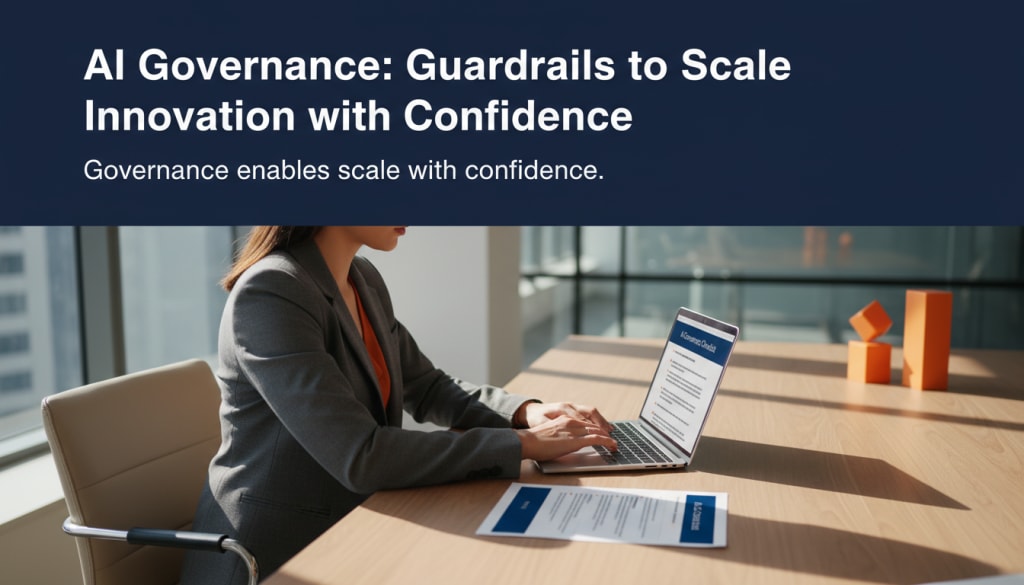
AI governance is critical for organizations looking to scale safely. While some executives may feel that governance slows innovation, the truth is quite the opposite. Effective AI governance frameworks enable organizations to innovate consistently without risking compliance or operational setbacks. By establishing robust AI risk management practices, businesses can confidently unleash new capabilities. This not only fosters an environment of continuous learning but also aligns with enterprise AI strategy, empowering teams to take calculated risks while ensuring adherence to AI compliance best practices.
The argument
Validate Objection
Many executives, particularly Chief Operating Officers and compliance leaders, perceive governance as a hindrance to innovation. This sentiment is understandable; after all, the fast-paced technology landscape often prioritizes rapid deployment and agile adaptations. However, this perception can overlook the essential role that governance plays in successful innovation. Without a robust AI governance framework, organizations may face serious compliance issues, brand damage, or financial penalties when deploying AI systems. Thus, while it may seem that governance acts as a roadblock, it is, in fact, a necessary layer of protection that can also foster creative and strategic growth.
Root Cause
The traditional approaches to AI governance often fail because they are too rigid or overly complicated. Many organizations implement governance structures that are disconnected from their core business objectives or technology environment. This disconnection can lead to inconsistencies, compliance gaps, and slow adoption of AI initiatives. Moreover, a lack of a consolidated AI policy framework means that various departments may operate under their interpretations of governance, which leads to misalignment and confusion. When organizations fail to contextualize governance within their enterprise AI strategy, they risk alienating innovation efforts, consequently hampering their potential for growth.
Continue readingShow less
Modern Solution
Conversational AI offers a dynamic solution that goes beyond traditional AI governance models. By automating compliance checks and providing real-time feedback, modern governance frameworks facilitate a more proactive approach to risk management. Solutions like Lyriq.ai leverage advanced analytics to monitor AI activities continuously, allowing organizations to respond to potential issues before they escalate. Such systems can adapt to changing regulations and business needs, ensuring governance evolves alongside innovation. This modern approach not only supports compliance but also empowers employees to innovate freely, knowing that robust guardrails are in place.
Business Impact
Implementing a strategic AI governance framework has significant business implications. Research indicates that organizations that prioritize governance see a 30% increase in successful AI project implementations compared to those that neglect it. By reducing the risk of compliance failures, businesses can lower the potential costs associated with legal actions and brand reputational damage. Moreover, the ability to analyze performance metrics rigorously leads to a better understanding of AI's impact on business outcomes. This clarity enhances decision-making processes and drives innovation, allowing organizations to capitalize on new opportunities confidently.
Differentiation
When comparing modern AI governance approaches with traditional methods, the differences are stark. Lyriq.ai stands out by integrating compliance and risk management into the AI development lifecycle seamlessly. While traditional governance often results in bottlenecks, our solutions streamline regulatory adherence without compromising the innovation pipeline. By focusing on agility and continuous learning, organizations can maintain a competitive edge, ensuring their AI strategies align with both compliance and creative exploration.
Address Concerns
It’s natural for executives to have concerns regarding the balance between governance and innovation. Questions often arise about how to implement an AI policy framework effectively without hindering creativity. The key lies in fostering a culture that embraces compliance as a facilitator rather than a barrier. Stakeholders should focus on real-time monitoring and adaptive governance to ensure policies are relevant and supportive of ongoing initiatives. Organizations must also seek feedback from teams regularly to fine-tune governance structures that promote confidence and innovation.
CTA
To navigate the complexities of AI governance without stifling innovation, consider using our AI Governance Checklist. This resource provides a structured approach to developing an effective AI compliance strategy tailored to your organization's unique needs. By following these best practices, you can empower your teams to innovate boldly. Embrace governance as your ally and unlock the full potential of enterprise AI. Get your checklist today and take the first step towards scalable innovation!
What to do next
What to ask before you roll out an AI governance framework
Before you treat governance as a cost center, pressure-test whether your framework actually connects to how your teams build and ship AI:
- Ask whether your governance structure is tied to real business objectives, or whether it sits disconnected and risks the compliance gaps and slow adoption the article warns about.
- Ask if every department is working from one consolidated policy, or whether teams are improvising their own interpretations and drifting out of alignment.
- Ask whether compliance checks run in real time across the AI lifecycle, so issues surface before they escalate rather than after.
- Ask how your framework adapts when regulations or business needs change, instead of forcing a rigid review that becomes a bottleneck.
- Ask your teams directly whether governance feels like a facilitator or a barrier, and use that feedback to tighten the guardrails.
Treat governance as the layer that lets people innovate with confidence, not the thing slowing them down. If you want to see how continuous monitoring and trust and compliance fit into the build process, book a demo with LYRIQ.